
Four Relationships That Influence Developing Musicians
Developing musicality is a journey that takes many years of dedicated effort. As that journey unfolds, relationships shape the environment in which learning takes place. When students are thriving in lessons, it’s because these relationships are positive and functional. If a student is struggling, I assess these relationships to see where repair is needed.
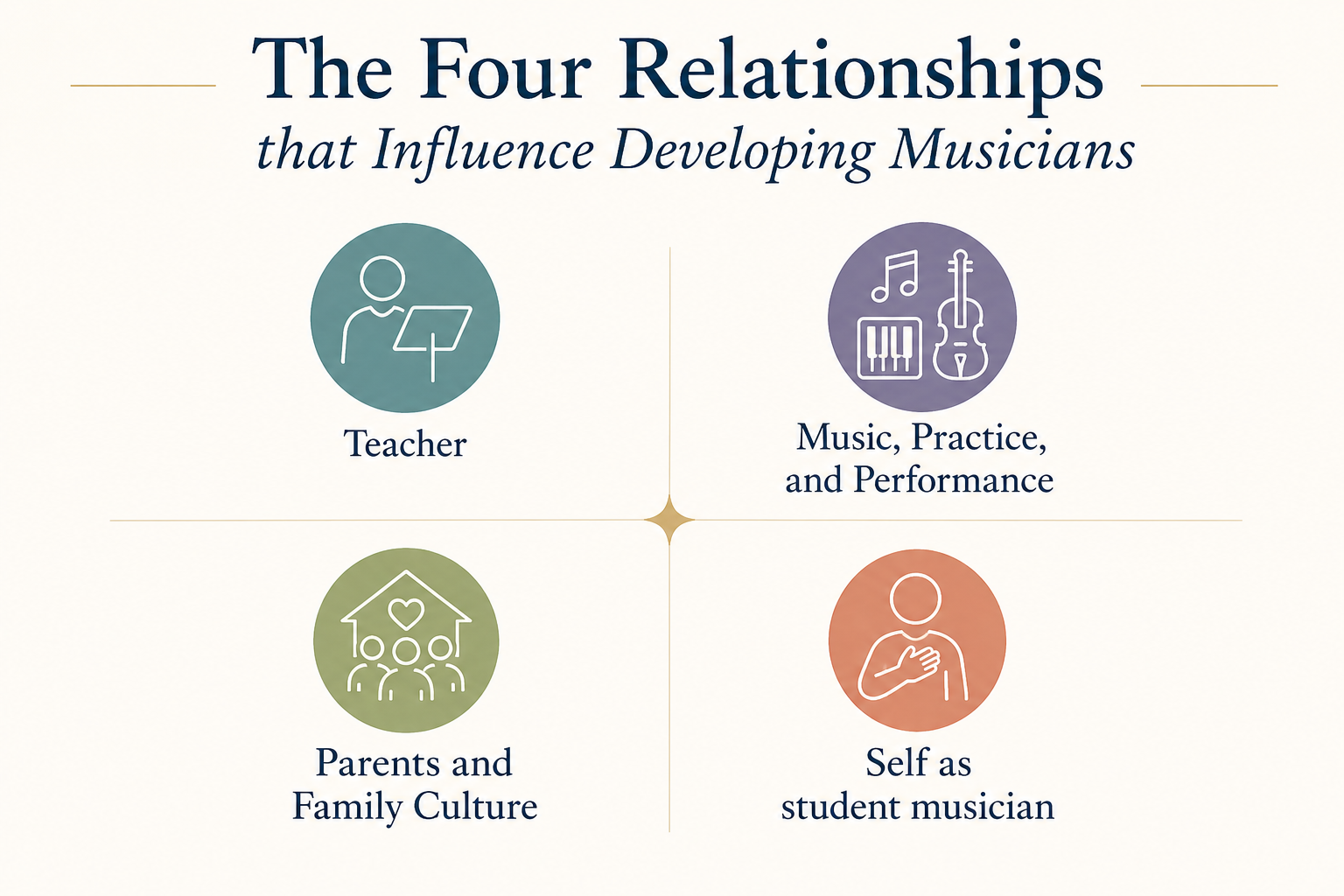
I have come to feel that there are four core relationships that influence a student’s musical development. The first is the student’s relationship with the teacher. The second is their relationship with home and family culture. The third is their relationship with music itself and the work of practice. The fourth is their relationship with themselves as a student, learner, and musician.
Relationship 1: The Teacher
I cherish the role I get to play in my students’ development. To thrive on their musical journey, a student needs solid rapport with a caring and capable teacher. Whenever I relate with my students, I practice warmth, patience, encouragement, and attentiveness. I want my students to know that I am truly invested in their musicianship. I celebrate every milestone and personalize their experience in response to their learning style, interests, and needs.
Establishing trust is foundational to a dynamic that supports curiosity and creativity. When students feel secure, they are free to express themselves and attempt unfamiliar things. This is the relationship over which I have the most influence, and I consider it an honor to hold space for the brave and vulnerable work of becoming an artist.
Relationship 2: Music, Practice, and Performance
It is vital to a student’s musicianship that they listen to good music often and pay attention to what music speaks most to them. One of my objectives as a music educator is to expose students to excellent music from past and present so my students can be nourished and inspired by the artists who came before them and develop a sense of what kind of musical artist they wish to become.
A student’s relationship with music gradually deepens through frequent practice. In each practice session, a student musician affirms their desire to become a more capable artist through intentional listening, refinement, repetition, and experimentation. Neural pathways strengthen through consistent engagement, and moments of deep presence and creative flow become increasingly accessible. Over time, the cumulative effect is fluency, strong intuition, expressive freedom, and confident artistry.
A student needs to feel that practicing is their choice, and they need agency over the music they study. Creative exploration through improvisation and composition deepens a student’s relationship with music, and students with a healty relationship to music feel naturally drawn to write songs that express their feelings, ideas, and interests.
Audience also matters differently to each student. Some students make music primarily for themselves and prefer to keep their musical expression private. Others thrive through collaboration and feel energized when they can jam, rehearse, and create with other musicians. Some students are fulfilled when sharing their music with a live audience as a soloist or with a group. Positive performance experiences can strengthen a student’s relationship with music, while painful experiences can leave lasting wounds. Part of my work as an educator is creating opportunities for students who wish to share their music.
Relationship 3: Parents and Family Culture
Music education flourishes when it is supported by a home environment that values creativity, consistency, and emotional encouragement. Parents and family members help shape the atmosphere in which musical growth takes place. Through their words, routines, attention, and attitudes, they communicate whether music is meaningful and worthy of time and care.
I deeply appreciate parents who participate in their child’s musical journey with curiosity and support. When families remain engaged with lessons, encourage practice routines, celebrate progress, and communicate openly with teachers, students often experience a greater sense of stability and confidence. Music gradually becomes woven into the fabric of daily life rather than existing as an isolated activity.
Alignment between parent and teacher also creates a sense ofcoherence around the student’s development. Shared values and communication help students feel guided and supported by the adults surrounding them. This relationship carries tremendous influence because children develop their sense of self through repeated emotional experiences at home. Over time, encouragement, attentiveness, patience, and genuine interest begin to shape the student’s confidence, resilience, and artistic identity.
Relationship 4: Self as student musician
Every student carries an internal world into the learning process. Their thoughts, emotions, self-image, expectations, and beliefs about their own capabilities all influence the way they experience music. Over time, students gradually develop an identity around their musicianship, and this identity shapes the way they approach challenge, creativity, performance, and growth.
I want my students to experience themselves as capable, expressive, imaginative, and resilient. Musical development offers countless opportunities to practice patience, courage, emotional regulation, perseverance, and self-awareness. Students learn how to remain present through difficulty, how to recover from mistakes, and how to trust themselves through unfamiliar experiences.
As students grow musically, they also grow personally. They begin to recognize their own voice, preferences, sensitivities, and creative instincts. Confidence develops through repeated experiences of effort, expression, and discovery. Over time, music becomes part of how students understand themselves and relate to the world around them.
Closing Thoughts
Over time, these four relationships begin to reinforce one another in beautiful ways. Musical thriving emerges through relationship, consistency, emotional safety, curiosity, artistry, and meaning. Students grow through connection, participation, and belonging.
This is one of the reasons I find music education so profound. Musical growth touches identity, emotion, imagination, discipline, relationship, and selfhood all at once. To teach music is to accompany another human being through a deeply meaningful process of becoming.
