
How I Teach Composing
Composition is where a musician becomes a creative artist. I include composing activities in my work with my students for the way that it sensitizes the ear, invites them to make creative choices, and deepens their understanding of music theory. My own teaching changed when I became a composer.
Some students compose songs with lyrics to affirm the things that matter to them. Others enjoy the aesthetic beauty of creating something beautiful without words. Some students write songs to commemorate special occasions. My students who are now experienced composers seem to explore music like they are asking musical questions. They find a musical idea that fascinates them and spend time exploring it, and I love testing possibilities and collaborating on where it could go next. I set an example to my students of composing by teaching them songs I compose and writing a song for them on their birthday.
Some of my students prefer to compose over learning pieces of music other people wrote. Some of my students are not interested in writing their own music, opting instead to play pieces of music they know and love.
For the students open to composing, I design story-based group music classes to give my students a playful context to share their latest music with peers. For more about this see my article about The Five Curricula I’m Designing.
How I See Composing
Composition is actually the combination of two skills: improvisation and transcription.
Improvisation is the live expression of musical imagination interpreted through voice or instrument. The student hears the music within them only a moment before it is sung or played. Strengthening the connection to that creative impulse is part of the work I do with my students.
Transcription is representing a musical idea symbolically. Representing notation on the staff is the goal, but many of my students start by representing music with colored blocks or colored marks on paper before transitioning to the staff.
Teaching Composing to Toddlers
I use colored blocks to teach composing to toddlers. Toddlers are in the stage where they are mastering the scale pattern as they explore musical relationships through experiments and playing short musical sequences.
One of my favorite activities is this simple activity below where we place an object into the ‘window’ and ask “What is it?” Then the toddler says, “It’s a ______”
Improvisation Activity: Set up two colored blocks to be the notes for ‘it’s a…’ The child will begin by playing these two notes and then improvise the rest of the sentence. Respond to their pattern by repeating it.
Transcription Activity: Represent the pattern with the blocks after improvising the pattern.
Taking Turns: Teacher improvises a melody, the student transcribes. Then student improvises a melody and teacher transcribes.
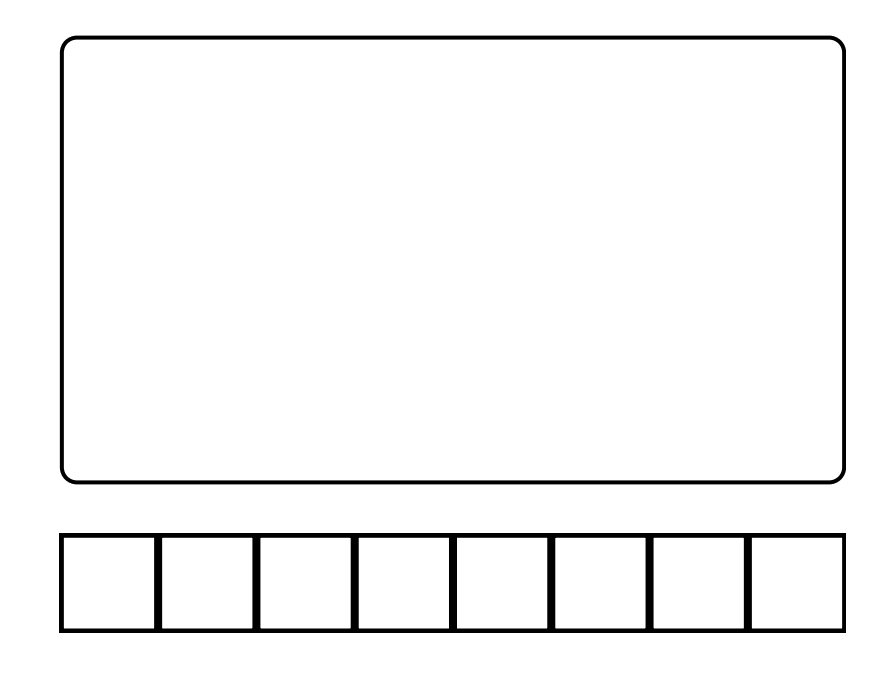
Window box composing activity for toddlers
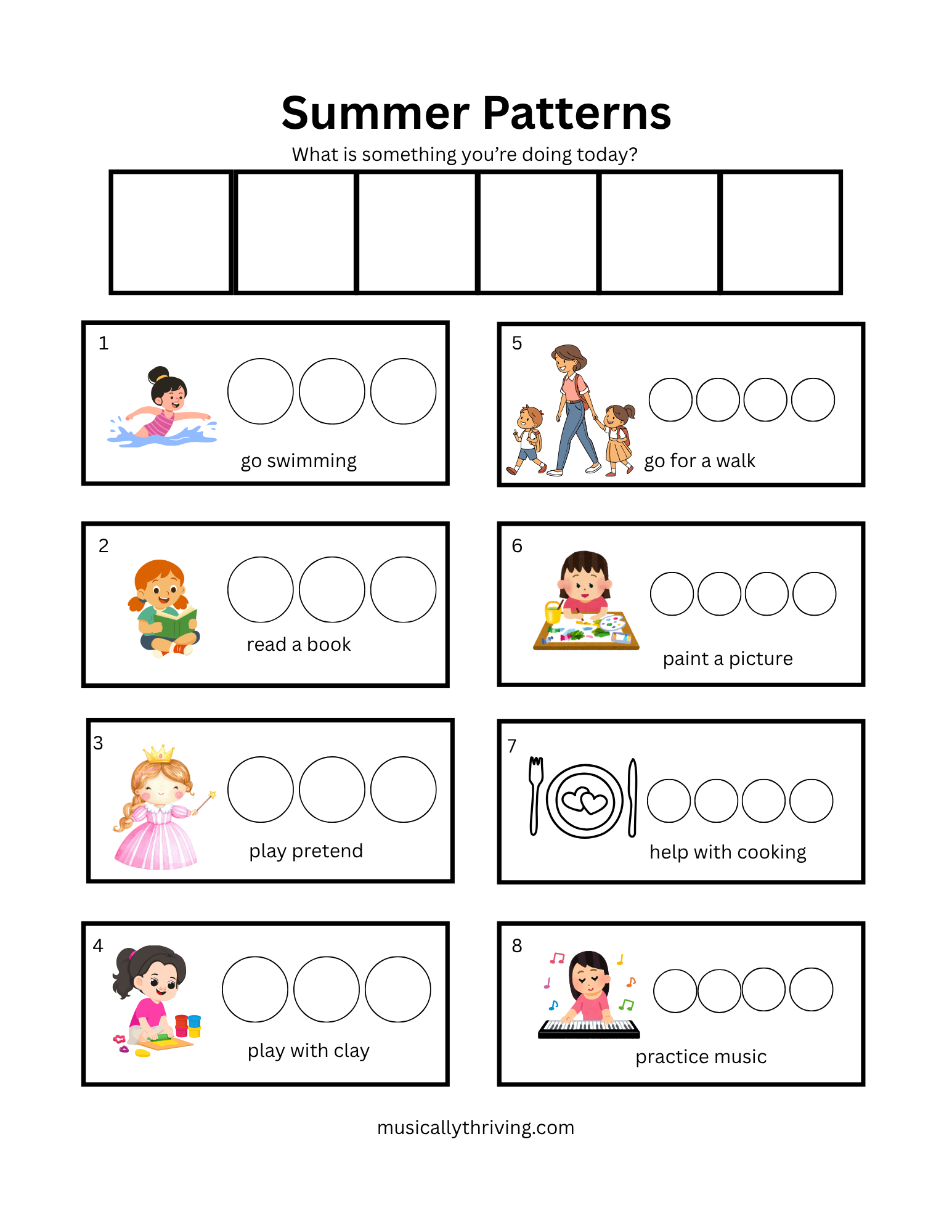
Pre-K kids can compose their own melodies at lessons and then practice them at home.
Students who are ready to explore all 12 keys can play the same song in all 12 places on the piano.
Teaching Composing to Kids
Once they can read, I introduce the staff and begin reinforcing the concept of key as we work through a 12-key curriculum that includes composing worksheets. They write their songs with colored noteheads on a learning staff that has color support.
For timid composers, I begin by demonstrating composing by suggesting two different ways the song could go and have them choose between the two, then guide them through writing it down. Once they are comfortable with that process, I then invite them to take turns with me generating musical ideas for the lyrics. Eventually they become confident enough to generate all of their own ideas.
Once a student is ready to explore the concept of harmony, we take the time to find bassline harmonies for our compositions by testing out possibilities and affirming what works.
Improvising and transcription exercises continue in this phase, inviting students to duet with me over chord progressions and write down familiar melodies.
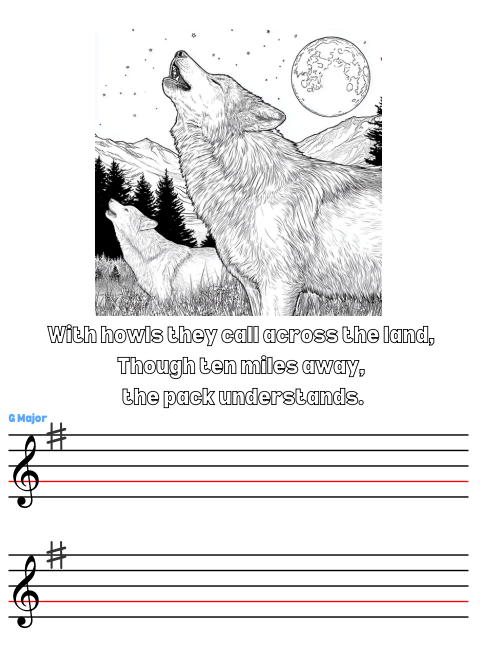
The line where DO lives is marked in red on this learning staff.
The student who is not yet confident with the staff working independently can color the outlined font to indicate the note, which can then be transcribed in a music lesson.
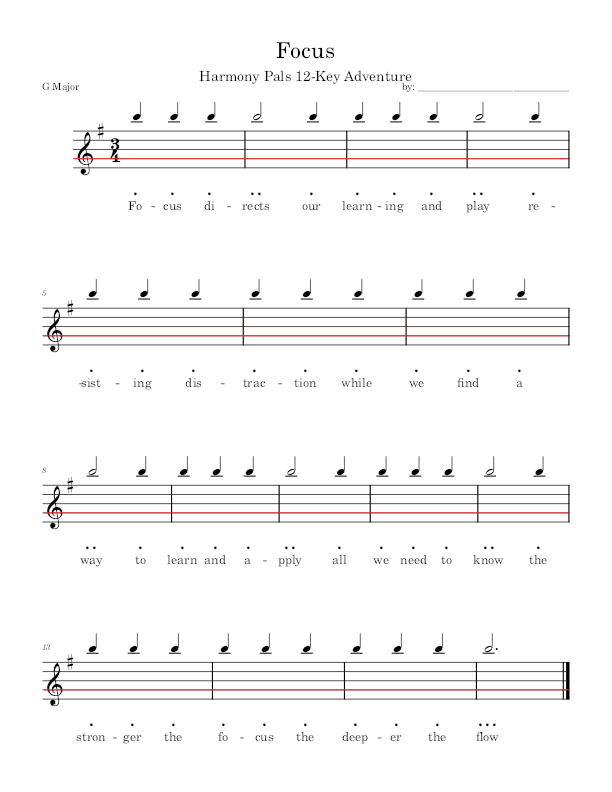
This composing worksheet provides rhythm and lyrics while teaching the essential value of focus.
Here is an example of a song that a ten year old student wrote for her father’s birthday. We first searched the web for ‘birthday card poems’ and when we found one we liked, she sang to me how she wanted it to go and I transcribed it for her, then we went through it and tested chords together until it was harmonized.
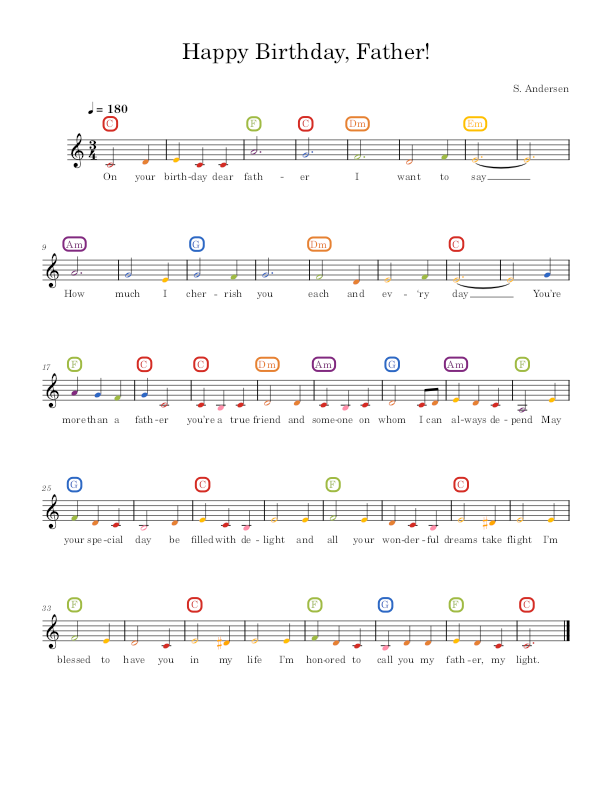
Songs like these are cherished gifts that become a part of a family’s culture.
As students get more advanced, their music will explore key changes, chord extensions, bassline patterns, and unique time signatures. It’s amazing to see the musical growth in my students as they engage in composing. You can see why the music I’m most interested in hearing is the music my students write themselves.
